
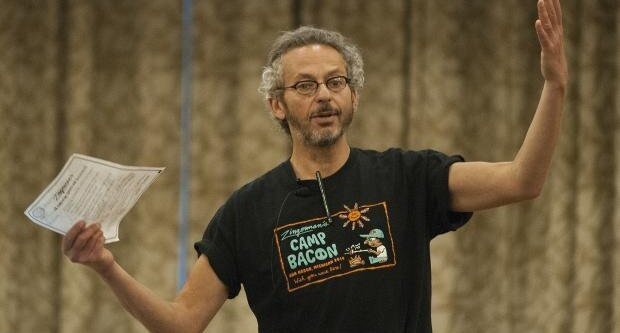
“If we can’t manage ourselves well as leaders, the odds of our business doing well aren’t good either,” says Ari Weinzweig, co-Founding Partner of Zingerman’s Community of Businesses in Ann Arbor, Michigan.
Since its founding in 1982, Ari and his partner Paul Saginaw have grown a small delicatessen to a nationally renowned company with over 10 businesses employing over 750 employees and over $60 million in annual revenue. And they are shining examples of what enlightened leaders do! (No pun intended.)
Unfortunately, only a small percentage of leaders are the enlightened ones in my experience. Many are stuck on an endless wheel of firefighting and frustration, neglecting the urgent and sacrificing the important. And – not getting anything done in the process. But it is possible to escape this pattern of suffering, get focused and create a meaningful legacy too.
What does it take? Here’s five best practices from one of the most highly-respected CEO’s in the world that will get you started on your own path to becoming an enlightened leader!
1. Cultivate Self-Awareness and Manage your Own Energy
Being self-aware and managing your own energy is a critical first step for the Servant Leadership that exists at Zingerman’s. “Most of the world doesn’t recognize that they’re operating in violation of the natural laws of human nature.” And for better or worse says Ari, our energy, if we manage it properly is the gift that keeps on giving – helping us create positive bonds with our employees, maintaining a positive and upbeat attitude, allowing us to read a group and respond appropriately.
All that said, we all slip sometimes, Ari admits. We are human after all. “But even a small bit of increased consciousness helps us cut our incidences in half, which has a huge positive impact on our organization.”
2. Be Transparent
“You need to be real as a leader,” says Ari. Effective leaders learn to consistently share their feelings – in inoffensive, meaningful, ways that allow others to hear what they’re saying and so that people know that the people they work for are people too. That includes your uncertainties. “When they know you had your doubts, but decided in a considered and caring way to go forward anyway. They’re far more likely to get behind you.”
“The reality is that no leader will accomplish anything productive without colleagues who willingly choose to go wherever their (singular and plural) vision says that they’re going. And if our new staff members are kind, caring and intrigued enough to entrust their futures to us, we believe we’d better take the time to meet them, hear their hopes and history, and then in turn, share our story, our dreams…”
3. Have a Vision – for Everything – No Matter How Big or Small
Which leads to one of the unique characteristics that makes Zingerman’s really standout in the world of business today – their commitment to creating a vision for everything meaningful that they do.
“Our visioning process is very detailed,” explains Ari. “Every project starts with a vision, most of us have written a personal vision statement. It’s really a blueprint for yourself…and you typically don’t change it.” They crafted the vision for Zingerman’s in 2020 in 2007 and it’s 9 pages long. “It’s an inside-out exercise,” says Ari, “What we want to do, not can’t do. The future that we want to create. [But simply said], it needs to be inspiring, strategically sound, documented and communicated.”
4. Be Open
Zingerman’s has been a disciple of Jack Stack’s Open Book Management for over two decades. Like a lot of the things that Ari and Paul do, however, they didn’t not practice Open Book management when they first started.
“We just weren’t open because we didn’t know about it.” When they did start looking for the best ways to run a company and discovered “The Great Game of Business” they knew immediately that the approach lined up with their values. And why not use what Jack and his team had created to run a better company? “He had the answers,” says Ari, very simply. “The old model doesn’t let people know how money really works. Our employees were making decisions without the data. And without that data, employees think owners have all of this money that we don’t really have. What’s the deal, they’ll say? So we broke some plates? But if they have the information, and they have the data, they’ll do a better job AND provide insights to improving the business.” It’s not magic, he says. It’s just common sense.
5. Always Be Learning – and Promote the Value of Learning to Others
Quite simply, writes Ari in “Being a Better Leader”, it’s way easier to do a good job [as an employee] when you know what ‘good’ is, when you have the tools you need to learn what you need to know, and are clear in the measurements and the rewards for work well done. Zingerman’s spends time and money to make sure that people are trained and educated. Their internal organization, Zing Train helps to support that goal.
And for anyone in a leadership role, they ask that all managers and partners do an average of two hours of formal learning a week AND one hour a month of teaching in the organization. “The more we teach, the more we learn, the more we clarify our message…” By the way, formal doesn’t have to be going away to a workshop. Books, audio, websites, consumer magazines, attending classes inside or outside the company all qualify. Learning isn’t ‘extra’, says Ari. It’s part of the work that we expect.